
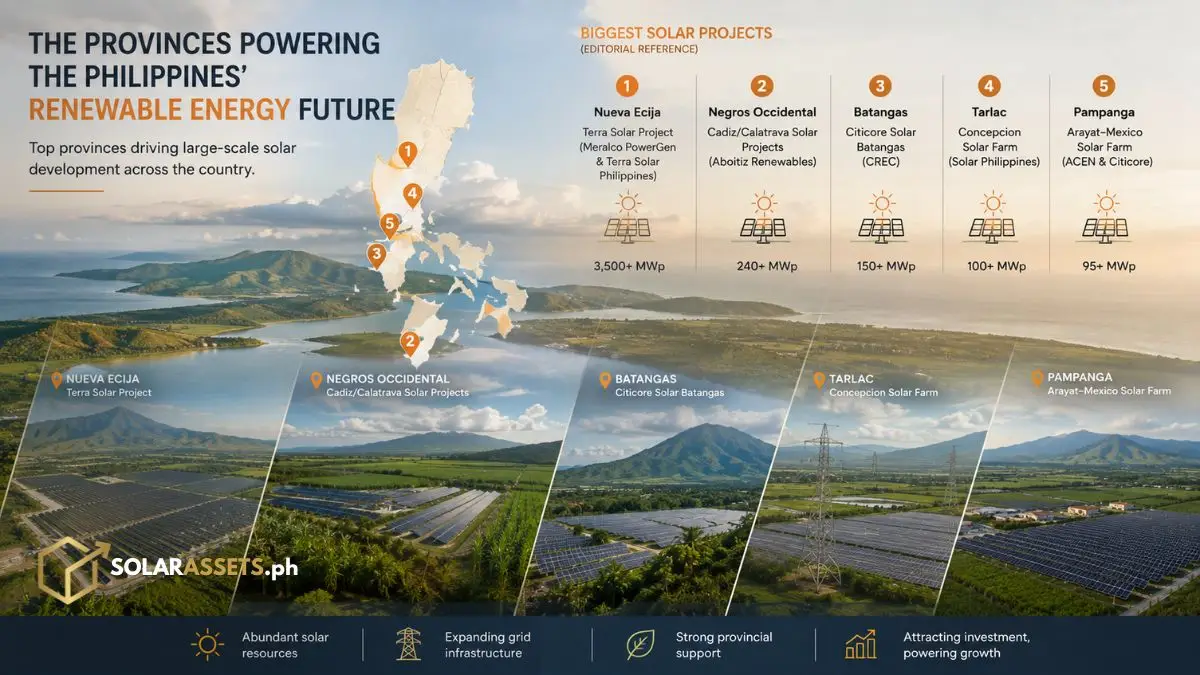
- Renewable energy growth is accelerating across several Philippine provinces.
- Flagship solar projects are helping position regional centers as renewable energy hubs.
- Strategic land use and infrastructure are attracting long-term clean energy investments.
- Regional development is playing an increasingly important role in the country’s energy transition.
The Philippines’ transition to renewable energy is being driven not by a single landmark project, but by several provinces that have become home to some of the country’s largest utility-scale solar developments. As investments continue to expand beyond Metro Manila, regional growth is becoming one of the defining characteristics of the country’s clean energy future.
From Central Luzon to the Visayas, these provinces demonstrate how strategic land availability, infrastructure, and private sector investment are creating new opportunities for renewable energy development.
Nueva Ecija and Bulacan: Home to MTerra Solar
Central Luzon has become one of the country’s most active renewable energy regions, anchored by MTerra Solar (also known as the Terra Solar Project) spanning Nueva Ecija and Bulacan. Developed by Terra Solar Philippines in partnership with Meralco PowerGen (MGEN), the project is expected to deliver up to 3,500 MWp of solar PV capacity supported by 4,500 MWh of battery energy storage, making it one of the world’s largest integrated renewable energy developments.
Beyond its scale, Terra Solar reflects the growing importance of Central Luzon as a strategic location for future energy infrastructure, supported by available land, improving connectivity, and proximity to major demand centers.
Negros Occidental: Expanding Renewable Energy in the Visayas
Negros Occidental continues strengthening its renewable energy portfolio through projects such as Cadiz Solar and Calatrava Solar, developed by Aboitiz Renewables. These investments reinforce the province’s position as one of the Visayas’ leading renewable energy locations while supporting regional economic growth and long-term energy resilience.
As renewable energy investments continue to expand across the Visayas, Negros Occidental demonstrates how established facilities and new utility-scale developments can complement one another. The province’s growing renewable energy portfolio strengthens regional energy security while supporting long-term economic development and infrastructure investment.
Batangas, Tarlac, and Pampanga Continue Building Momentum
Renewable energy investment is also accelerating across several provinces in Luzon, where utility-scale solar developments are reinforcing regional infrastructure while supporting industrial growth and energy security.
In Batangas, projects such as Citicore Solar Batangas highlight the province’s growing role in supporting renewable energy alongside its established industrial and commercial sectors.
Tarlac is home to the Concepcion Solar Farm, developed by Solar Philippines, reflecting the province’s strategic position within Central Luzon’s expanding infrastructure network.
Meanwhile, Pampanga continues contributing through developments such as the Arayat–Mexico Solar Farm, a collaboration between ACEN and Citicore, reinforcing the province’s importance within the Clark growth corridor and Central Luzon’s renewable energy landscape.
Regional Development Is Driving the Energy Transition
Each province represents a different chapter in the Philippines’ renewable energy story. While the projects vary in scale and location, they share a common objective: expanding the country’s clean energy capacity while encouraging regional investment and infrastructure development.
Together, Nueva Ecija, Bulacan, Negros Occidental, Batangas, Tarlac, and Pampanga demonstrate that the future of Philippine renewable energy will be shaped by coordinated regional investment rather than a single flagship project. As provinces continue strengthening infrastructure and attracting clean energy developers, regional partnerships will remain central to the country’s long-term renewable energy transition.
The province has attracted major utility-scale solar investments due to its strategic location, available land, and growing renewable energy infrastructure.
MTerra Solar, also known as the Terra Solar Project, is an integrated solar photovoltaic and battery energy storage development spanning Nueva Ecija and Bulacan. Once completed, it is expected to become one of the world’s largest renewable energy facilities of its kind.
Renewable energy projects require suitable land, supporting infrastructure, and regional investment, making provinces key partners in the Philippines’ clean energy transition.
Renewable energy projects succeed through collaboration. Whether you’re a solar developer, EPC contractor, landowner, broker, investor, or asset manager, Solar Assets PH helps connect people, properties, and projects that move the renewable energy industry forward.